

Versatile use
“On the recommendation of a holistic dentist, I drink my coffee with collagen powder and also use it for smoothies or other dishes. The powder is completely neutral and dissolves wonderfully.”
Collagen from
Swiss pasture-raised cattle.


Incl. VAT · Shipping calculated at checkout
Storage:
Store sealed, cool and dry, keep out of reach of small children.
Not a substitute for a balanced and varied diet.
Germany:
€3.99 · free from €60 · 1–3 business days
EU:
9,99 € · free from 150 € · 5–7 business days
Switzerland:
10 CHF · free from 250 CHF
5–7 business days (duty and tax unpaid)
Shipped with DHL.
Ingredients:
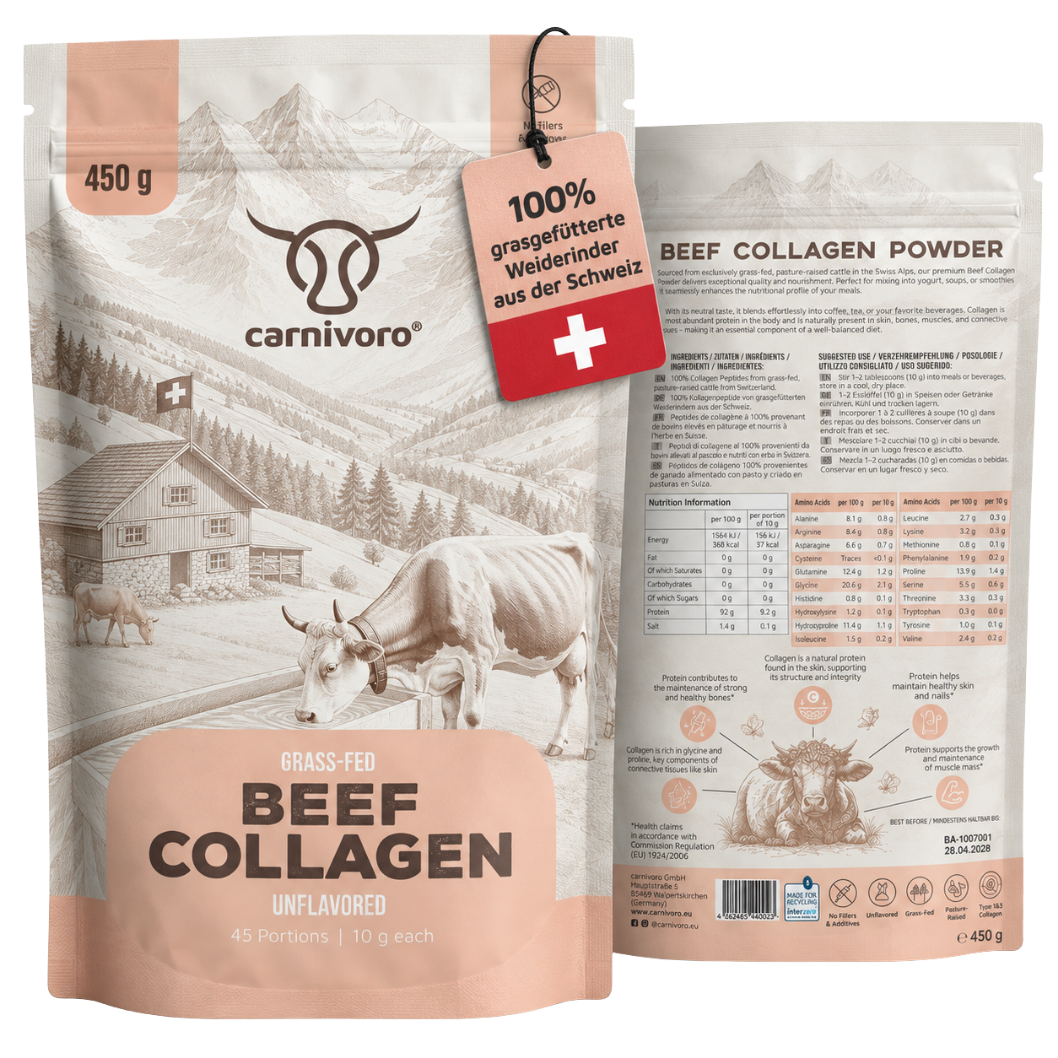
100 % hydrolyzed beef collagen peptides from grass feeding (Switzerland).
One ingredient, nothing else.
Collagen type I & III · approx. 95 % protein · 18 amino acids.
Per pack:
450 g — approx. 45 servings of 10 g.
Stir 1–2 tablespoons (approx. 10 g) into food or drinks daily. Flavor-neutral, dissolves without residue in cold and warm liquids.
In stock - delivery 1-3 business days
What our customers say about
Beef Collagen:
Tasteless,
Versatile. Excellent solubility.
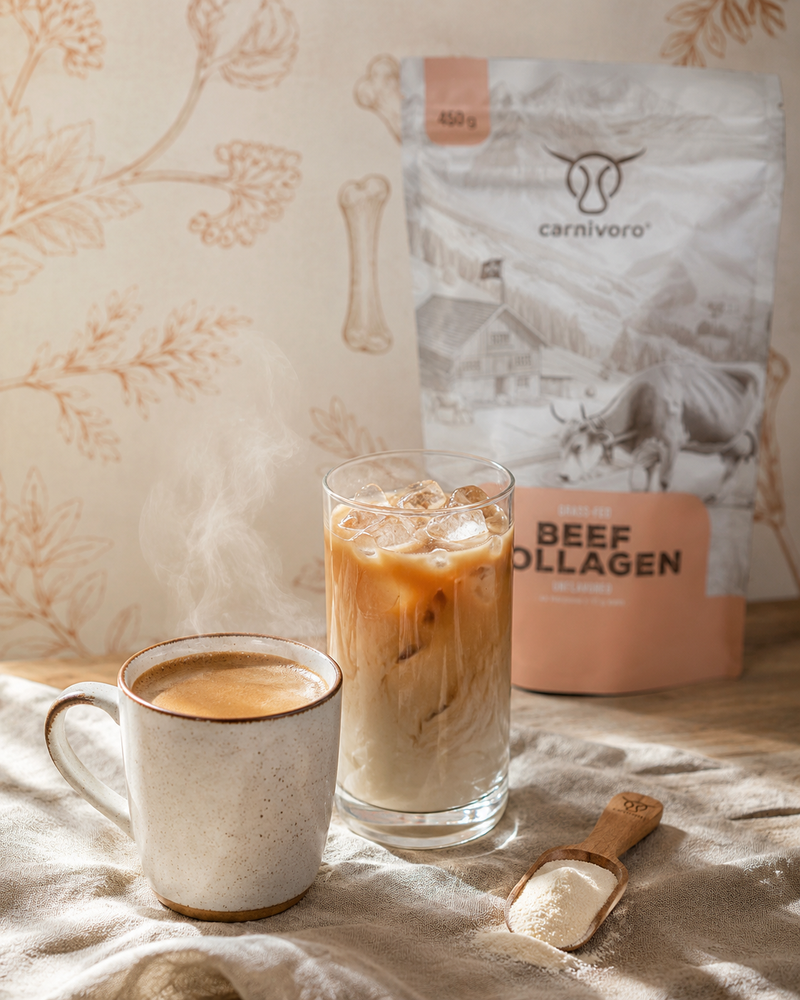
Easy to mix. No clumps.
1 tsp into black coffee, flavor-neutral.
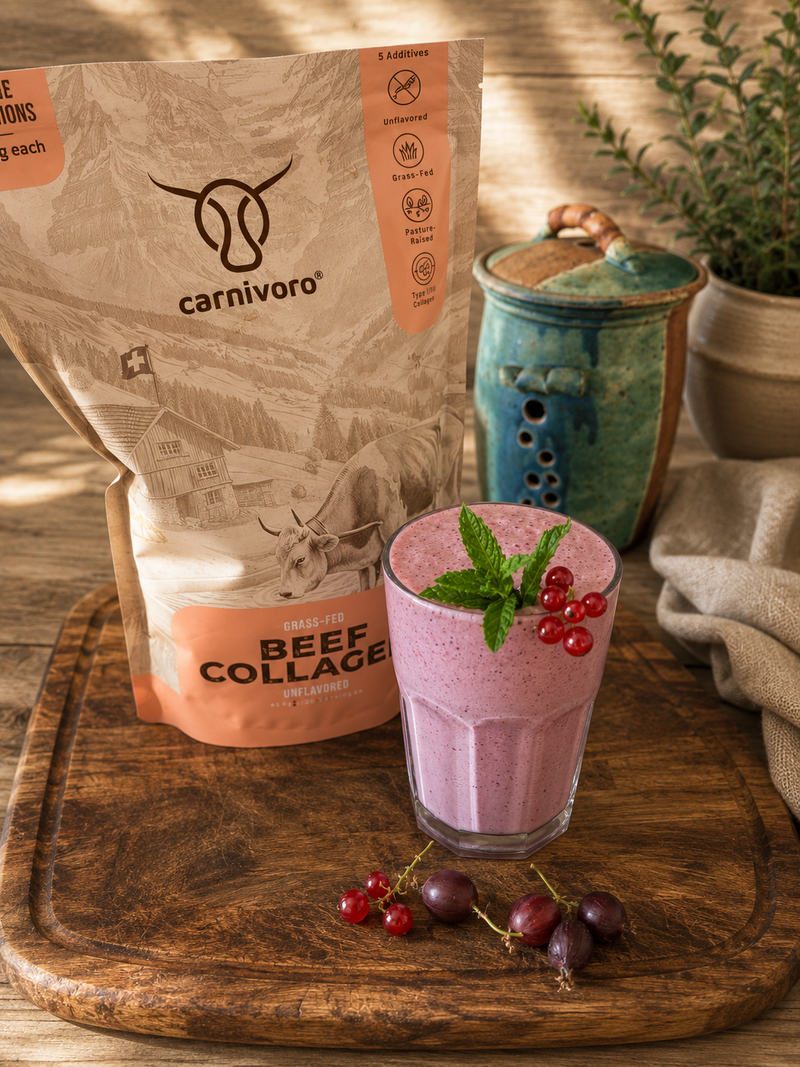
Into the blender, completely neutral in taste.
Blend with warm milk for extra-stable milk foam thanks to the protein content.
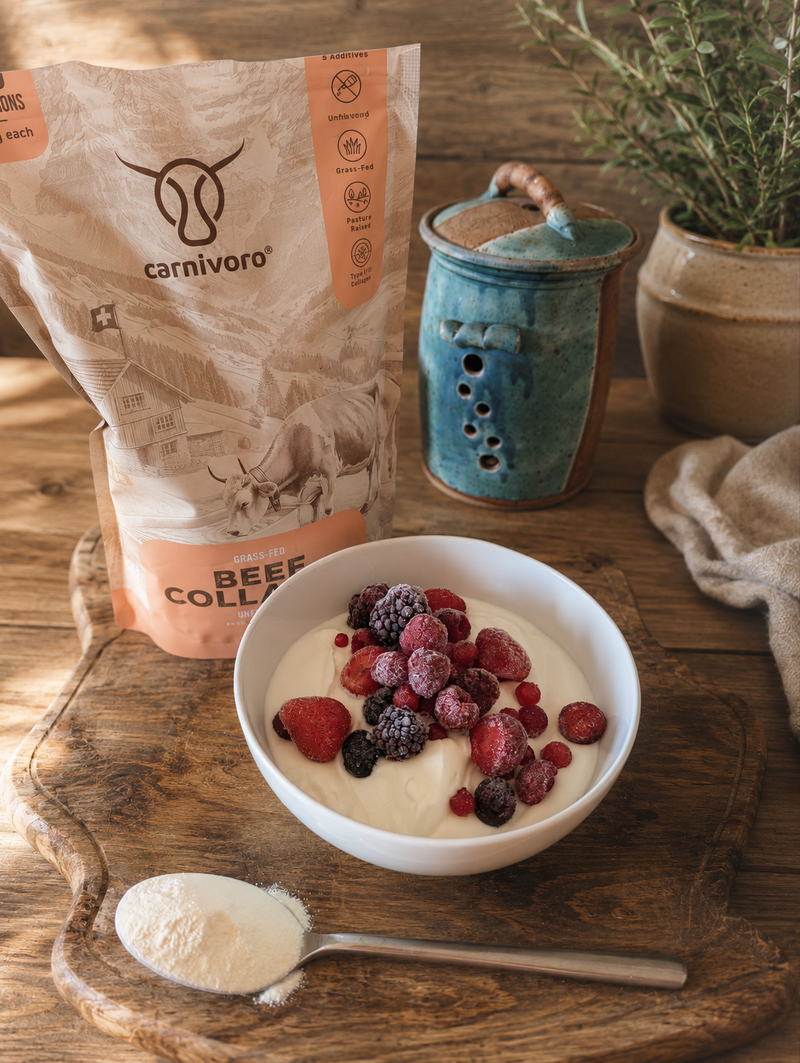
Simply sprinkle over for a protein boost.
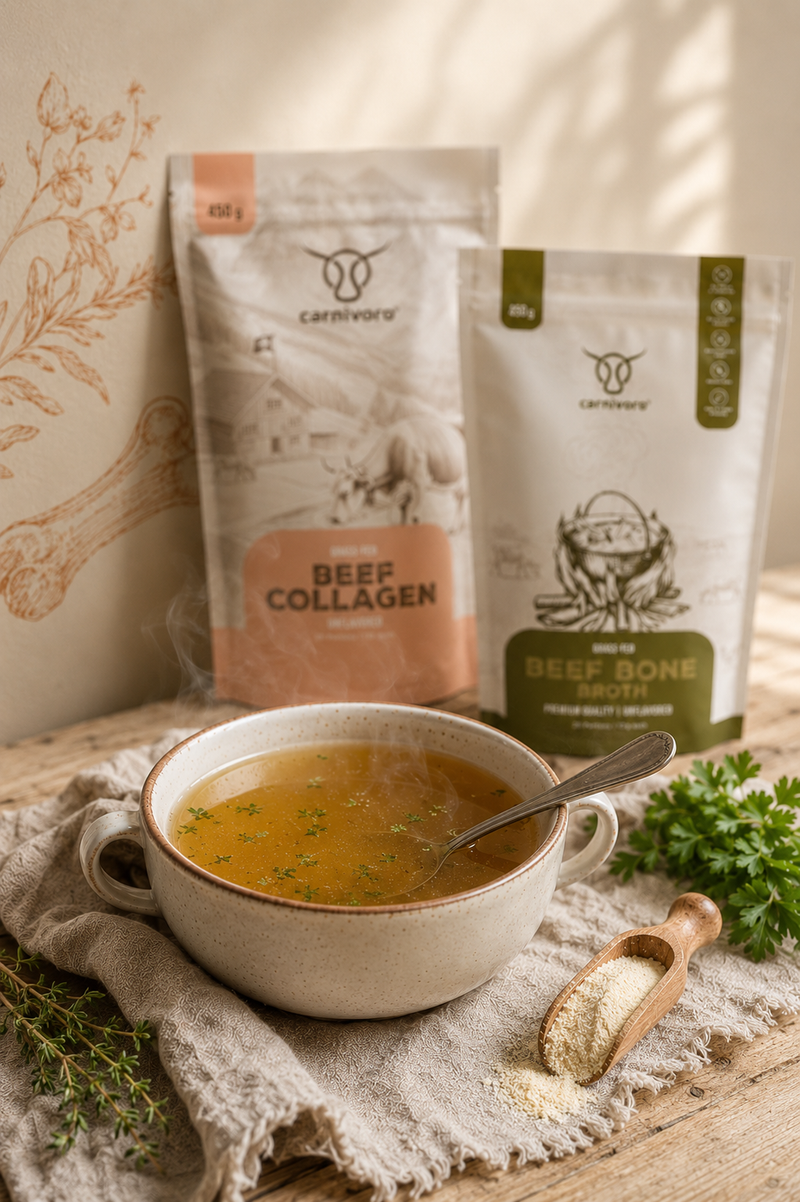
Stir in, no clumps, a pure boost.
Tip: Vitamin C contributes to normal collagen formation.
Foods such as citrus fruits, berries or bell peppers are a sensible addition to your diet.

Collagen is the most abundant structural protein in your body. Swipe through to see everywhere it's found.
of the skin is made of collagen types I & III, the scaffold that gives it structure and firmness. With increasing age the body produces less and less of it.
Glycine and proline supply the amino acid building blocks from which keratin, the basic substance of hair, is built.
Strong nails, too, are made of keratin, built from the same amino acids that collagen supplies in abundance.
Collagen is the main component of tendons, ligaments and cartilage, everywhere the body needs tensile strength.
Structural protein in fascia and the fine mesh that holds organs and tissue in place.

The values describe the body's own collagen biology and do not constitute an efficacy claim about the product. Food supplements are not a substitute for a balanced diet.
Why we are on Swiss Settling cattle for grazing.


What is in our beef collagen?
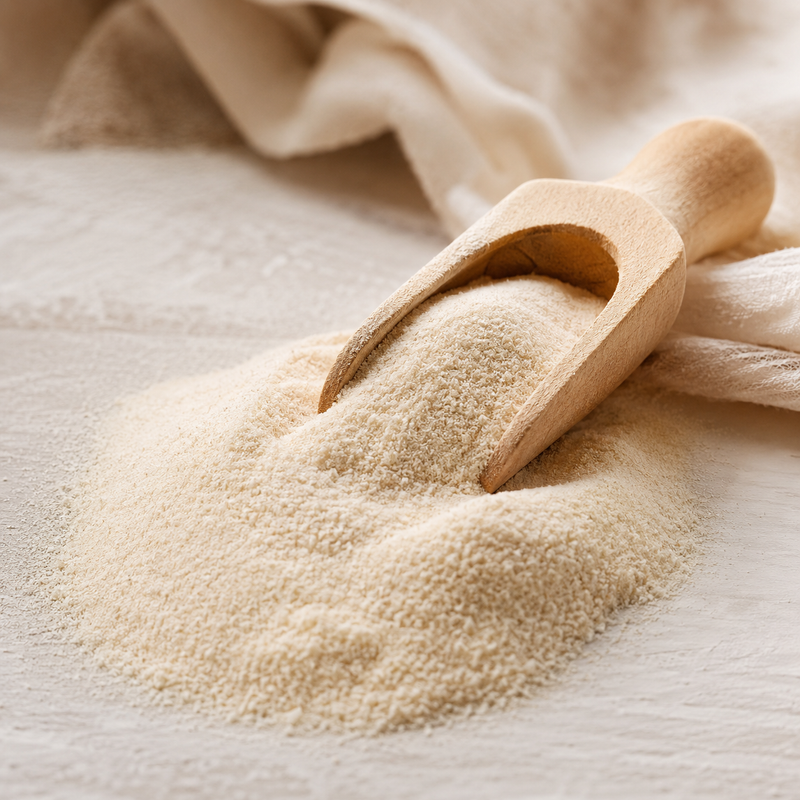
Pure, hydrolyzed collagen peptides of type I & III, the most common collagen types in the body. Around 95 % protein, a complete profile of 18 amino acids.
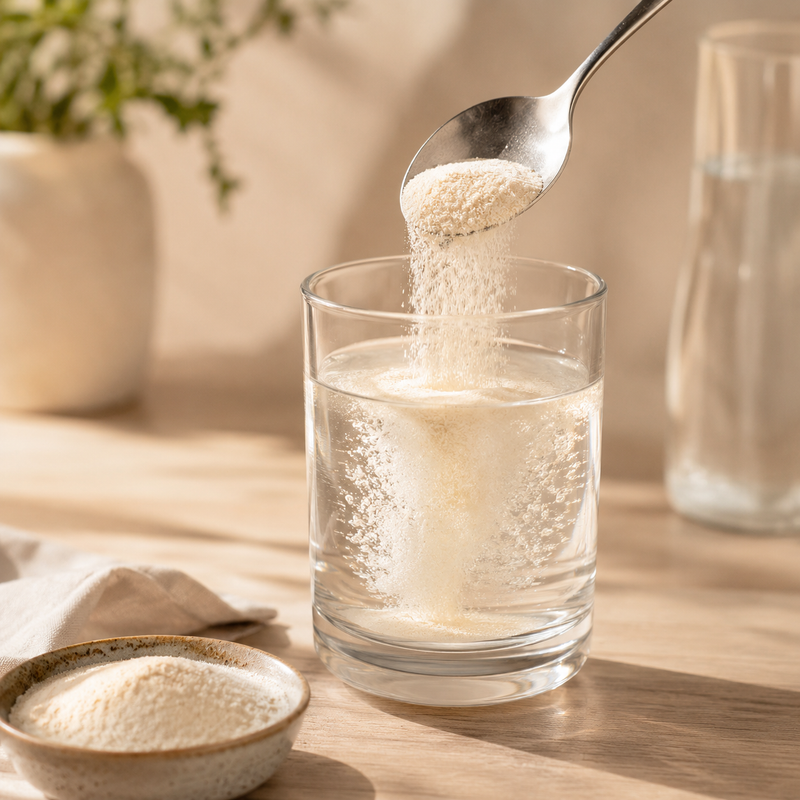
Exactly the amino acids that dominate collagen: around 18 g glycine plus about 12 g proline and 11 g hydroxyproline per 100 g.
| Amino acid | per 100 g |
|---|---|
| Alanine | 7.5 g |
| Arginine | 7.9 g |
| Aspartic acid | 5.2 g |
| Cysteine | Traces |
| Glutamic acid | 10.4 g |
| Glycine | 18.1 g |
| Histidine | 1.1 g |
| Hydroxylysine | 0.6 g |
| Hydroxyproline | 10.9 g |
| Isoleucine | 1.5 g |
| Amino acid | per 100 g |
|---|---|
| Leucine | 2.9 g |
| Lysine | 3.2 g |
| Methionine | 0.5 g |
| Phenylalanine | 2.0 g |
| Proline | 12.1 g |
| Serine | 2.7 g |
| Threonine | 1.8 g |
| Tryptophan | 0 g |
| Tyrosine | 0.5 g |
| Valine | 2.1 g |
Values may vary slightly from batch to batch. Typical values for hydrolyzed beef collagen peptides according to laboratory analysis. 20 amino acids are listed; 18 of them in measurable amounts — cysteine only in traces, tryptophan usually not present.
Why Beef Collagen contains no added vitamin C.
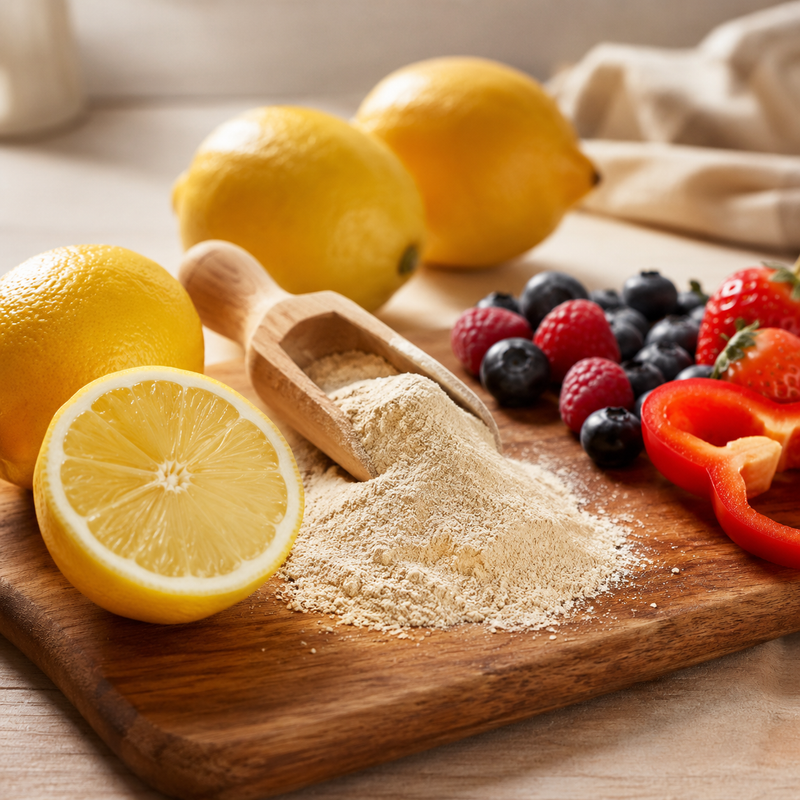
Almost all collagen products advertise added vitamin C, because there is an authorized claim for it: “Vitamin C contributes to normal collagen formation.” This is often misleadingly used.
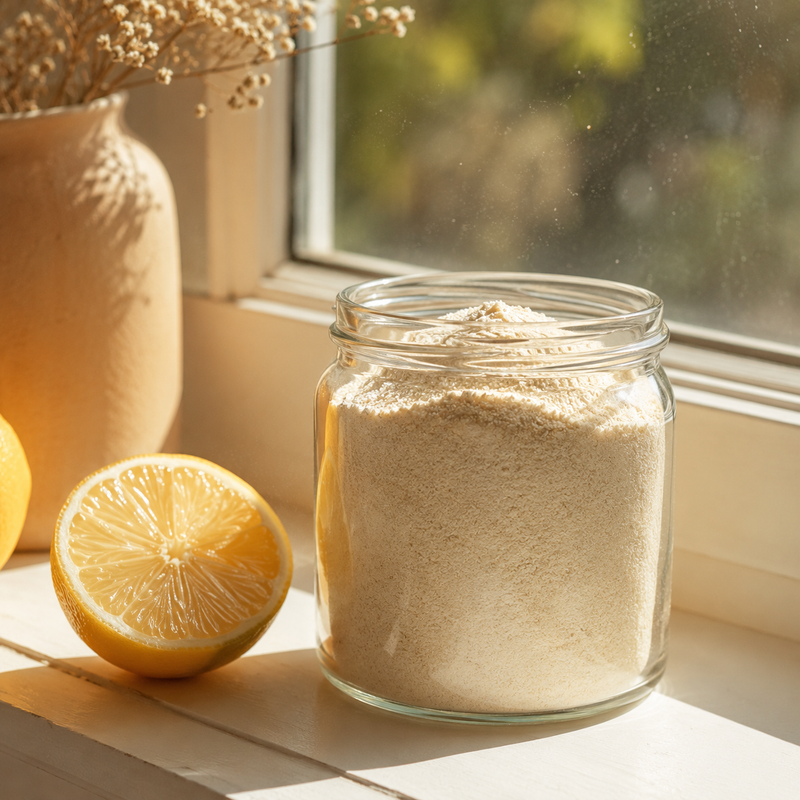
Vitamin C is sensitive to light and oxygen and degrades over time, visible even in the discoloration. An additive that loses effect while still in the tin is of little use. Fresh from food is more reliable.
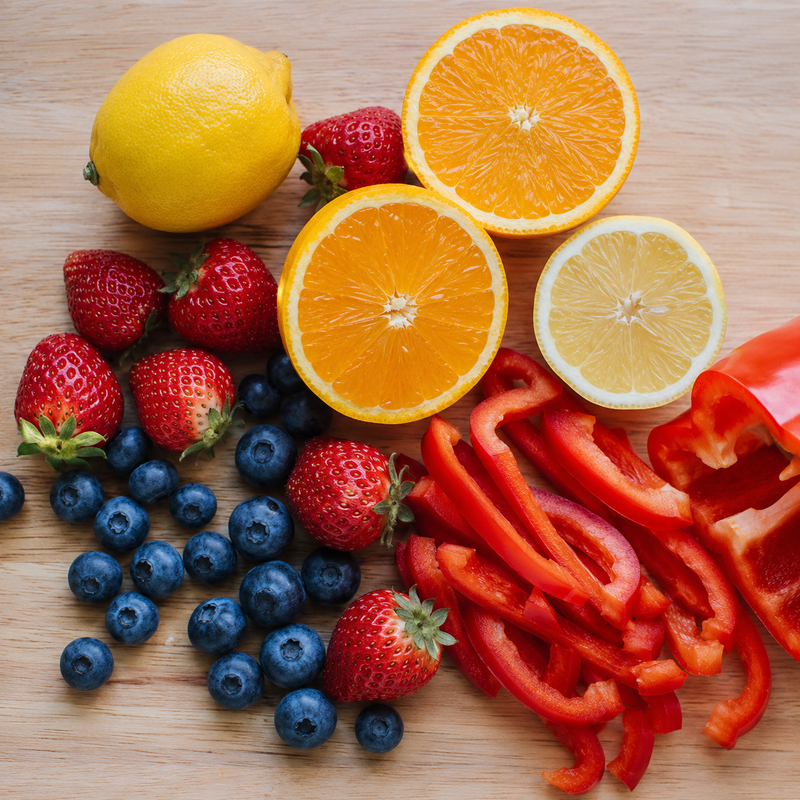
Often only a mini dose is added, just enough to be allowed to advertise with the claim. We don't do that. You're best off getting vitamin C fresh:
Citrus fruits, berries, bell peppers
Vitamin C improves the absorption of ingested collagen.
Vitamin C is involved in the body's own collagen formation. That is something different from the utilization of collagen from food.
Authorized claim under Regulation (EU) No 432/2012: “Vitamin C contributes to normal collagen formation.”
A cheap filler in many collagen powders. Makes the
powder free-flowing, and worse.
Silicon dioxide, magnesium stearate, tricalcium phosphate &
co., the hidden flow agents. We don't need them.
No MCT oil powder, no coconut oil powder, no modified
starches. What's in the pouch is collagen.
Neither “natural” nor artificial. Pure hydrolysate
tastes of nothing, perfect for any use.
No stevia, no sucralose, no sugar. Completely.
neutral in taste.
A common emulsifier and carrier in industrial powders.
In ours: not included.
Dry powder needs none. Long shelf life, without tricks.
Independent accredited laboratories test every production batch for heavy metals, microbes, histamine and glyphosate. These are the values of the current batch.
Tested batch: BA-1014301 (BBD 08/2028)
Not detectable
No findings, including Listeria and Salmonella
All six parameters not detectable
LOQ = the laboratory's limit of quantification. Maximum levels according to the EU regulations applicable to the product category. As of September 2026.

Beef Collagen is a food, not an active substance. A regular intake over 4 to 12 weeks is common in studies. Individual experiences vary widely, we make no promises, but deliver pure peptides in transparent quality.
Anyone eating carnivore, ketogenic or animal-based typically eats almost only muscle meat, rich in methionine, but low in structure-building amino acids such as glycine, proline and hydroxyproline.
In nature these are found above all in tendons, skin and bones, animal parts that used to be eaten as a matter of course, but today mostly no longer make it onto the plate.
Beef Collagen closes this gap: 95 % pure protein with a high proportion of glycine, hydroxyproline and proline, and that as a single ingredient: nothing but hydrolyzed beef collagen.
Yes. The collagen peptides dissolve without residue in hot as well as cold liquids and are stable up to common beverage and cooking temperatures. Simply stir into coffee, tea or warm dishes.
Flavor-neutral and readily soluble, hence versatile. Popular options: a spoonful in your morning coffee (with a bit of cinnamon if you like), in a smoothie with berries and coconut water, or in a warm broth with turmeric and ginger.
Tip: Vitamin C contributes to normal collagen formation, combine your Beef Collagen e.g. with some fruit or a glass of orange juice.
Yes. That is the main advantage of hydrolysate over classic gelatine. The short peptide chains dissolve without residue in cold as well as warm liquids, no gelling, no clumps.
No. Hydrolyzed collagen is neutral in taste and smell. In coffee, water or warm milk you barely notice it, no metallic or fishy aftertaste, as occurs with inferior material.
You're flexible on timing, in the morning in coffee, in a smoothie, or in the evening in a warm meal. More important than the time of day is regular daily intake. Take it whichever way fits your routine best.
1 to 2 tablespoons (approx. 10 g) daily. Simply stir into coffee, tea, a smoothie or a warm meal, flavor-neutral, dissolves without residue in cold and warm liquids.
Beef Collagen is a pure food, 100 % hydrolyzed beef collagen peptides, a single ingredient. Food supplements are not a substitute for a balanced diet.
Yes. Beef Collagen consists of a single ingredient, hydrolyzed beef collagen peptides. It is naturally gluten-free, lactose-free and soy-free, without flavorings, sweeteners or additives.
It comes down to the raw material. Beef Collagen is obtained from the connective tissue of cattle (skin and bones), and this naturally consists of collagen types I and III, the most common types in skin, bones, tendons and ligaments.
Collagen type II, by contrast, comes almost exclusively from cartilage and therefore usually stems from chickens, not cattle. In addition, type II is often offered as native collagen in very small amounts, whereas Beef Collagen delivers high-dose, hydrolyzed peptides from a single ingredient.
When a product advertises "type II", it is mostly obtained from cartilage or bone broth, where type II is present only in traces and cooked (denatured). A pure, hydrolyzed beef collagen contains no type II, but instead consistently high-dose types I & III.
Per 10 g serving, the powder delivers 9.5 g pure protein, corresponding to 95 % protein content. Fat- and carbohydrate-free.
Both deliver collagen, but in different form, taste and use.
Beef Collagen is a highly pure, flavor-neutral protein powder (100 % hydrolyzed collagen peptides), fat- and carbohydrate-free, highly soluble in cold and warm drinks. Ideal for smoothies, coffee, yogurt.
Bone Broth is dehydrated bone broth from bones simmered for 72 h, with a savory, gelatinous taste, as a broth or soup base.
Collagen whose protein chains have been enzymatically split into small peptides (typically 2–5 amino acids per chain). This makes it dissolve in cold as well as warm liquids without clumping, unlike native collagen or classic gelatine, which gel at cold temperatures.
450 g per pack corresponds to about 45 servings of 10 g. With one serving daily, a pack lasts around one and a half months. You'll find an exact calculation in the requirement calculator on this page.
Collagen peptides are a pure food protein without critical micronutrients (e.g. without concerning amounts of vitamin A). Even so, with food supplements you should, if in doubt, speak with your doctor or midwife.
Collagen peptides are a pure food protein and are generally considered well tolerated. As with any protein powder, a very large amount may individually upset the stomach. In case of known intolerances or pre-existing conditions, speak with your doctor if in doubt.
From the collagen-rich connective tissue of grass-fed Swiss pasture-raised cattle. Through the hydrolysis process, pure, readily soluble collagen peptides are obtained from it.
The raw materials come from Switzerland. We use the collagen-rich connective tissue of grass-fed Swiss pasture-raised cattle. Through the hydrolysis process, pure, highly soluble collagen peptides of type I and III are obtained from it.
Cattle from Swiss pasture farming spend most of the year on pasture and feed on grass and herbs. This has two consequences for quality:
Lower-residue raw material: Since collagen is extracted from connective tissue, residues from fattening feed can accumulate there. Pure pasture farming avoids this.
Natural maturation: With grass feeding, the animal grows at its natural pace, the connective tissue matures healthily and stably.

Collagen from Swiss meadows.
Order now